Why Martin Rhodes MP’s Event Approach Matters
Martin Rhodes MP has a reputation for running events that draw crowds across demographics. His secret isn’t flashy theatrics or big budgets—it’s accessibility. During his opening speech at The Meetings Show, Rhodes emphasized how inclusive event planning boosts participation and makes communities stronger. The takeaway? If your pricing model doesn’t welcome everyone, you’re leaving impact (and revenue) on the table.
The Problem with Fixed Ticket Pricing
Most nonprofits stick to flat pricing for events. It’s simple but shortsighted. Fixed prices can alienate key demographics—low-income families, students, and retirees—who might want to engage but can’t afford standard rates. The result? Empty seats and missed connections.
Take heritage societies as an example. A local arts event might set tickets at $20 each. But that excludes the very community members who’d benefit most—people who could share their cultural knowledge or volunteer for future programs. Flat pricing creates a wall, not a bridge.
The issue isn’t unique to nonprofits. Even for-profit organizations see diminishing returns when pricing strategies exclude potential audiences. For instance, a 2018 report by Eventbrite found that 45% of surveyed event organizers struggled with attendance because ticket prices were considered “too high” by their target audience. This underscores the importance of rethinking accessibility at all levels.
How Flexible Pricing Changes the Game
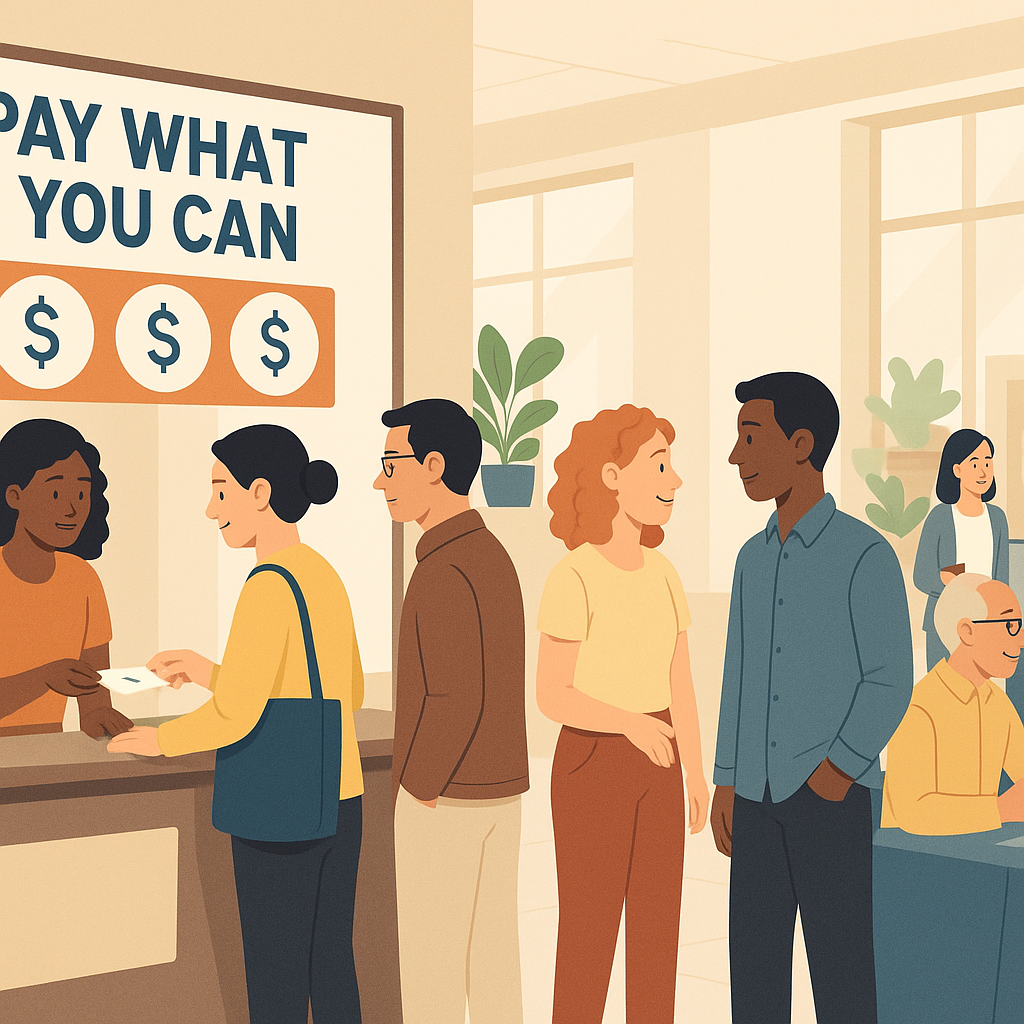
Rhodes highlighted how “pay-what-you-can” (PWYC) models transform accessibility. It’s not a handout; it’s a strategy. By letting guests choose their contribution, you welcome everyone while still raising funds. Rhodes isn’t alone in this thinking—countless community leaders are now embracing it.
We’ve seen this firsthand at CommunityTix. Our Pay What You Can (PWYC) feature lets nonprofits set suggested price points, but attendees can pay more or less depending on their circumstances. For example, a cultural association might suggest $10, $20, or $50 for event tickets. Some attendees stick to $10, but others pay $50 because they believe in the mission. The result? Higher attendance, better engagement, and often more net revenue than a fixed-price model.
Key Benefits of PWYC:
- Inclusivity: Welcomes diverse audiences by removing financial barriers.
- Revenue Upside: Attendees who are passionate about your cause often pay more than the suggested amount.
- Stronger Community Bonds: People feel valued and included, leading to better long-term engagement.
- Flexibility: Adjust suggested tiers based on your audience’s demographics and economic realities.
Real-World Example: The Power of PWYC
Last year, a volunteer-run club in Birmingham used CommunityTix for their annual fundraiser. They set a PWYC pricing model with three tiers: $15, $25, and $50. Attendance jumped 40% compared to the previous year, and their total revenue increased by 18%. Why? Accessibility. More people felt comfortable attending, and some gave generously. It’s a simple tweak with big results.
Another compelling example comes from an arts collective in Toronto. Through a PWYC model, they hosted a community theater performance with suggested contributions starting at $5. While 60% of attendees paid the minimum, 25% paid between $20 and $50, and 15% paid more than $50. They ended up doubling their projected revenue—proof that generosity thrives when people feel connected to a cause.
The Skeptic’s Question: Won’t People Pay the Minimum?
You might be thinking, “Won’t everyone just pay the lowest amount?” That’s a fair concern. But studies on PWYC models paint a different picture. According to research published by the Journal of Behavioral Economics (2019), about 28% of attendees typically choose higher-than-suggested tiers when they feel connected to the cause. This behavior is driven by the principle of reciprocity—when people feel they’re getting value, they want to give back.
Anecdotally, we’ve seen similar patterns. During a community health event in Manchester, 32% of attendees opted for the highest tier ($50). One guest even donated an extra $100 at checkout. The key is transparency—show why their contribution matters.
Tips to Encourage Generosity:
- Tell a Story: Highlight how contributions fund specific outcomes (e.g., “Your $20 helps provide meals for two families in need”).
- Express Gratitude: Thank attendees publicly or in follow-up emails to reinforce the value of their support.
- Create Social Proof: Share testimonials from previous attendees or donors who felt their contribution made a difference.
Accessibility Beyond Pricing
Flexible pricing is just one piece of the puzzle. Rhodes also stressed the importance of multilingual outreach and digital tools. For nonprofits serving diverse communities, language barriers can be as exclusionary as ticket prices.
Platforms like CommunityTix solve this with multilingual font support built into every event page. Whether your audience speaks Bengali, Mandarin, or Swahili, your event can accommodate them without hiring expensive translators. Additionally, offering virtual attendance options can expand accessibility for people who can’t travel due to finances, health, or other reasons.
Other Accessibility Tips:
- Venue Accessibility: Ensure your location is wheelchair-friendly and has clear signage.
- Childcare Options: Provide on-site childcare to eliminate barriers for families.
- Dietary Accommodations: Offer diverse food options to cater to cultural and dietary needs.
How to Start Using PWYC
Implementing a Pay What You Can model isn’t complicated. Here’s a step-by-step guide:
- Define Suggested Tiers: Set 2-3 price points that make sense for your audience. For example: $10, $20, $50.
- Explain Purpose: Use your event page to explain how contributions will be used. Transparency builds trust.
- Promote Generously: Market the model as a way to make your event inclusive. Highlight success stories from past events.
- Collect Feedback: After the event, ask attendees what they thought about the pricing model. Use surveys or informal chats.
- Track Results: Use tools like CommunityTix to analyze attendance and revenue data. Did PWYC increase engagement?
- Iterate: Refine your suggested tiers or outreach strategy based on feedback and data.
FAQ
Q: Does PWYC work for all types of events? A: Not always. PWYC is best for community-focused events where inclusivity matters. For high-cost productions or exclusive galas, fixed pricing may still make sense.
Q: How do I prevent underpayment from hurting revenue? A: Combine PWYC with suggested tiers and clear messaging about your mission. Most attendees want to support causes they believe in.
Q: Is PWYC hard to set up? A: Not at all. Platforms like CommunityTix make it easy with built-in PWYC options. You can launch in minutes.
Q: What if my audience isn’t familiar with PWYC? A: Educate them! Use your event page or social media to explain how the model works and why it benefits everyone.
Q: Can PWYC work for virtual events? A: Absolutely. Virtual events have lower overhead costs, making PWYC even more practical. Plus, it can attract attendees from around the world.
Comparison: Fixed Pricing vs. PWYC
| Feature | Fixed Pricing | Pay What You Can (PWYC) |
|---|---|---|
| Accessibility | Limited | High |
| Revenue Predictability | High | Moderate |
| Audience Diversity | Low | High |
| Setup Complexity | Simple | Slightly Higher |
| Best For | Exclusive or high-cost events | Community-focused events |
How We Can Help
If your nonprofit struggles with event accessibility or ticketing fees, CommunityTix has your back. Our PWYC feature makes inclusivity easy—without sacrificing revenue. Get started free →