Regent’s Events: A Nonprofit Tackles Digital Chaos
When Regent’s Events decided to overhaul their event management, they weren’t looking for flashy tech or buzzwords. They just wanted to stop wasting money. Sound familiar?
Their challenge was the same one most nonprofits face: fragmented tools. Events were managed on one platform, member data lived in spreadsheets, and their website looked like it hadn’t been updated since 2010. Worst of all, they were losing 8% of every ticket sale to platform fees. For a nonprofit running 15-20 events a year, that adds up fast.
Their goal was clear: eliminate unnecessary fees, unify their tools, and make events accessible to everyone — even those who couldn’t afford full-price tickets. What they didn’t expect? Saving over $12,000 in their first year.
The Problem: Platform Fees Are Bleeding Nonprofits Dry
Let’s talk numbers. A typical ticketing platform like Eventbrite charges 5-8% per ticket. Add payment processing fees, and you’re looking at 10% gone before you see a dime. For Regent’s Events, that meant losing $4,000 on a $40,000 annual event budget. That’s a part-time salary for a team member or funding for community programs.
Nonprofits across the board are facing this same issue. For example, a 2021 survey by Software Advice found that 59% of nonprofits listed "high software costs" as their biggest operational pain point. These costs often come from subscription fees, per-ticket charges, and hidden add-ons that aren’t always clear upfront.
To put this in perspective, let’s look at a hypothetical scenario:
| Annual Ticket Revenue | 10% Platform Fees | Potential Savings |
|---|---|---|
| $20,000 | $2,000 | $2,000 |
| $50,000 | $5,000 | $5,000 |
| $100,000 | $10,000 | $10,000 |
For a nonprofit, an extra $5,000 could fund a mentorship program, purchase supplies for a community event, or provide scholarships. The numbers don’t lie — these fees are a drain on resources that could be better spent elsewhere.
The Solution: Zero-Platform-Fee Ticketing
Regent’s Events made a bold move: ditching high-fee platforms for an open-source alternative. Enter CommunityTix, a zero-platform-fee solution designed specifically for nonprofits and small organizations.
Why CommunityTix Worked
-
No Platform Fees: With CommunityTix, Regent’s Events kept 100% of their ticket revenue (minus standard PayPal fees of 2.9% + $0.30 per transaction). For every $20 ticket sold, they saved $1.40 compared to Eventbrite.
-
Integrated Tools: The platform combined event calendars, ticketing systems, and member databases into one cohesive system. This eliminated the need for juggling multiple tools like Mailchimp, Excel, and Google Forms.
-
Ease of Use: Despite being open-source, CommunityTix was user-friendly. Regent’s team set up their first event in under 30 minutes — no tech expertise required.
Real-World Impact
In their first year, Regent’s Events saved over $12,000. Here’s how those savings broke down:
- $8,000 from ticketing platform fees
- $2,000 in reduced administrative hours (thanks to fewer tools and streamlined workflows)
- $2,000 from eliminating "hidden" subscription costs tied to their old platform
Those savings went directly back into their mission, funding a new after-school program for underserved youth.
Flexibility That Actually Works
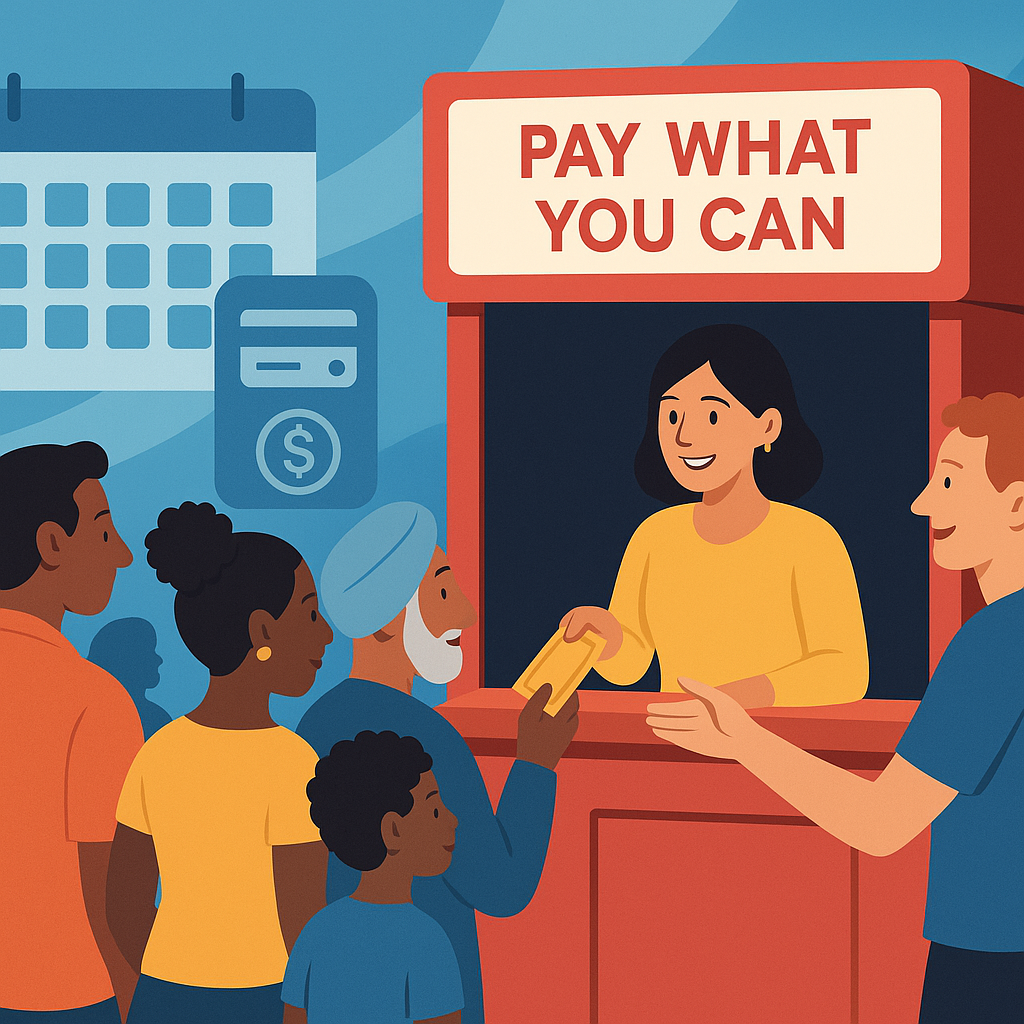
Nonprofits often struggle to make events financially accessible while still meeting revenue goals. CommunityTix’s Pay What You Can (PWYC) pricing model helped Regent’s Events strike this balance.
How PWYC Pricing Boosted Attendance
For their annual cultural festival, Regent’s Events implemented a tiered PWYC system:
- Suggested Price Points: $10, $20, and $30.
- Custom Amount Option: Attendees could enter any amount, starting as low as $1.
- Subsidization: Higher-paying attendees indirectly covered the cost of lower-priced tickets.
The results were remarkable:
- Attendance increased by 25% compared to the previous year.
- Revenue remained steady, hitting their target of $15,000.
- Over 40% of attendees paid more than the lowest suggested price, proving that people value the opportunity to support a cause.
Case Study: PWYC in Action One attendee shared that they brought their entire family of five to the festival for just $15, which would have been impossible at the standard ticket price of $20 per person. On the flip side, another attendee willingly paid $50 for a single ticket, stating, "I want to support this event and make sure others can attend."
This model not only made the event more inclusive but also fostered goodwill and community trust.
Lessons for Nonprofits: Start Small, Think Big
Digital transformation doesn’t have to mean overhauling everything at once. The key is to identify your biggest pain point and address it first. For Regent’s Events, it was ticketing. For your organization, it might be something else entirely.
Actionable Steps
- Audit Your Current Tools: Make a list of every platform you use for events, memberships, and communications. Identify redundancies and high-cost tools.
- Prioritize Your Pain Points: Are high fees eating into your budget? Are manual processes wasting staff time? Tackle the most pressing issue first.
- Research Alternatives: Look for solutions that align with your budget and technical capacity. Open-source platforms like CommunityTix are great for cost-conscious organizations.
- Start Small: Test your new system with a single event or program before rolling it out organization-wide.
- Measure Success: Track key metrics like attendance, revenue, and time saved. Use these insights to refine your approach.
FAQs
Q: What about payment processing fees?
A: PayPal charges standard fees (approximately 2.9% + $0.30 per transaction). Compared to the 8-10% fees charged by traditional platforms, the savings are significant.
Q: Is CommunityTix hard to set up?
A: Not at all. Regent’s Events launched their first event in under 30 minutes. The platform is designed to be as simple as creating a Facebook event.
Q: Can I use CommunityTix if my events are free?
A: Absolutely. Many nonprofits use it for RSVP tracking, capacity management, and on-site check-ins, even when no payment is involved.
Q: What if we need custom features?
A: CommunityTix is open-source, which means you can customize it if you have access to a developer. However, most nonprofits find the out-of-the-box features sufficient.
Q: How do I explain the switch to stakeholders?
A: Focus on the benefits: cost savings, streamlined operations, and increased inclusivity. Share success stories like Regent’s Events to illustrate the potential impact.
Decision Framework: Is CommunityTix Right for You?
| Question | If Yes, Consider CommunityTix |
|---|---|
| Are platform fees eating into your budget? | CommunityTix eliminates platform fees. |
| Do you run 10+ events annually? | The more events you run, the more you’ll save. |
| Do you need a simple, unified system? | CommunityTix integrates ticketing and memberships. |
| Are you open to open-source tools? | CommunityTix is free and customizable. |
| Is inclusivity a priority for your events? | PWYC pricing makes events accessible for all. |
Ready to Simplify Your Events?
If your nonprofit is tired of high fees and scattered tools, CommunityTix can help. Get started free today — no credit card required.