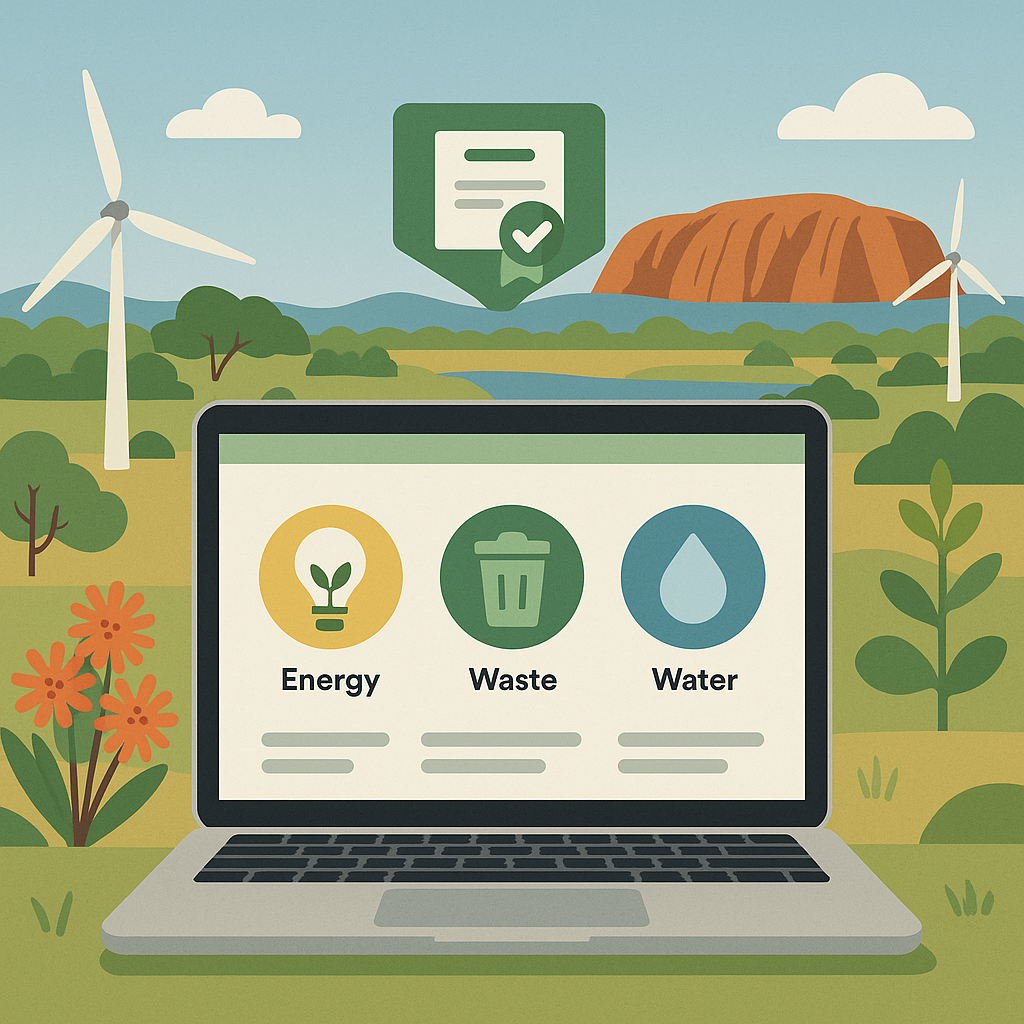
ECOsmart Certification: Worth It, But Time-Consuming
Sustainability certifications like ECOsmart are more than just a badge. They prove your commitment to eco-friendly practices and can attract environmentally-conscious partners and customers. But let’s be real: getting certified isn’t always easy. It’s a lot of paperwork, coordination, and admin work. Between tracking energy audits, managing waste-reduction plans, and documenting sustainability initiatives, you could spend weeks just getting your ducks in a row.
So, when Greengage and Discover the World announced their partnership to bring ECOsmart Certification to Australia, it was a big win for the hospitality and tourism industries. Why? Because the ECOsmart program promises to make sustainability certification less of a headache. But here’s the kicker—many small organizations still struggle with the logistics. Why? They’re stuck using scattered tools. Let’s talk about that.
The Problem With Scattered Tools
You’ve seen it before: spreadsheets for tracking data, email folders for communications, and random software for task management. It’s a chaotic system that works for a while—until it doesn’t.
Take sustainability audits, for example. You need to collect data on energy use, waste, and water consumption. But if those numbers live in different places—an old spreadsheet here, a notebook there—it’s a nightmare to pull them together. Add in the need to communicate with your team, get approvals, and submit reports, and it’s no wonder some organizations give up before they even start.
Here’s a concrete example: A small hotel in Melbourne tried to get ECOsmart Certified last year. It used email threads to coordinate tasks, a free app to log energy usage, and sticky notes to document waste reduction initiatives. When it came time to submit their application, they couldn’t find half the data they needed. After weeks of chasing down information, they missed the deadline.
This problem isn’t unique to sustainability certifications. Non-profits, community groups, and small businesses often run into the same issue. When tools don’t talk to each other, you end up wasting time—and sometimes money—trying to make them work.
How Centralized Tools Can Help
This is where a platform like CommunityTix comes in. I know what you’re thinking: "Wait, isn’t CommunityTix for events and membership management? What does that have to do with ECOsmart Certification?"
Here’s the connection: CommunityTix isn’t just about selling tickets. It’s a tool that centralizes your operations—events, members, blogs, and yes, even sustainability efforts. Here’s how it could help you keep your ECOsmart application on track:
1. Centralized Data
Use the member management feature to keep a single, organized database of everyone involved in your sustainability initiative. This means no more chasing down contacts or using multiple spreadsheets. For example, you can track who is responsible for energy audits, waste management, and water usage reporting all in one place.
2. Task Tracking
Set up events not just for ticket sales, but for internal milestones like submitting energy audits or scheduling waste reduction workshops. The RSVP feature can double as a way to track who’s attending or participating in these activities. Imagine setting up a recurring "Energy Audit Review" event and assigning roles directly within the platform.
3. Communication Hub
With the built-in blog feature, you can keep your team updated on project progress or share ECOsmart tips with your community. No need for a separate communication tool. For example, you could publish weekly updates on waste reduction strategies or shared successes from other ECOsmart-certified organizations.
4. Financial Transparency
If you’re hosting fundraising events to support your sustainability goals, CommunityTix’s zero-platform-fee model ensures every dollar goes directly to your cause. For example, one community group used CommunityTix to organize a green fundraiser, raising $5,000 that went toward installing solar panels.
Case Study: A community organization in Brisbane used CommunityTix to prepare for a local energy-efficiency grant application. They created a members-only event for tracking key milestones and used the RSVP tool to assign tasks. They also published blog updates to keep stakeholders informed. The result? They saved over 10 hours of admin time and submitted their application a week early.
Lessons From Greengage and Discover the World
So, what can we learn from the Greengage and Discover the World partnership? For starters, they understand the importance of partnerships in simplifying complex processes. Greengage brings sustainability expertise; Discover the World brings logistics and industry reach. Together, they make it easier for Australian businesses to achieve ECOsmart Certification.
Small organizations can adopt a similar approach by using the right tools. A platform like CommunityTix acts as a “partner,” helping you streamline the admin side of things so you can focus on the actual work that matters: reducing your environmental impact.
Comparison: Scattered Tools vs. Centralized Platforms
| Feature | Scattered Tools | Centralized Platforms (e.g., CommunityTix) |
|---|---|---|
| Data Management | Multiple spreadsheets and notebooks | Single, organized database |
| Task Tracking | Sticky notes and email threads | Integrated event and milestone tracking |
| Communication | Separate tools for blogs and updates | Built-in communication hub |
| Financial Transparency | High fees on fundraising platforms | Zero-platform-fee fundraising |
| Ease of Use | Requires manual coordination | Automated workflows and reminders |
FAQ: Common Questions About ECOsmart Certification
1. How much does ECOsmart Certification cost?
Costs vary depending on your organization’s size and industry. For small organizations, expect fees in the range of $500–$2,000. Larger businesses may pay more, but the long-term savings from sustainability initiatives often outweigh the upfront investment.
2. How long does it take to get certified?
Certification timelines depend on how prepared you are. If you already track energy, waste, and water data, you could complete the process in 4–8 weeks. If not, expect additional time to gather and organize this information.
3. Can small businesses realistically achieve ECOsmart Certification?
Yes! Small businesses can absolutely achieve certification by starting with low-cost, high-impact initiatives like energy audits, LED lighting upgrades, and better waste management practices.
4. Do I need expensive software to manage the certification process?
Not necessarily. Platforms like CommunityTix are affordable and versatile, allowing you to centralize operations without breaking the bank.
5. What’s the ROI of getting certified?
ECOsmart Certification can attract environmentally-conscious customers, reduce operating costs through energy and waste efficiencies, and improve your credibility in the marketplace. For example, a small café in Sydney reported a 15% increase in business after earning its certification.
The Bottom Line
ECOsmart Certification is becoming a must-have in Australia’s tourism and hospitality sectors. But getting there doesn’t have to be a logistical nightmare. By taking a page from the Greengage and Discover the World playbook—partnering to simplify processes—you can make sustainability certification achievable for your organization.
If you’re tired of juggling spreadsheets and email chains, CommunityTix can help. Get started free →