The Westminster Wake-Up Call: Why Nonprofits Should Pay Attention
Last week, Beam took the business events industry's voice straight to Westminster during their State of the Nation event. It was a bold move, shining a light on the growing disconnect between what event organizers need and what industry practices deliver. But here’s the kicker: nonprofits should be paying close attention, too. Why? Because many of the same struggles in the events sector hit community and cultural organizations just as hard—if not harder.
Let’s break it down and explore the lessons nonprofits can take from this wake-up call, complete with actionable steps, examples, and a framework to guide decision-making.
The Real Cost of “Convenience” Platforms
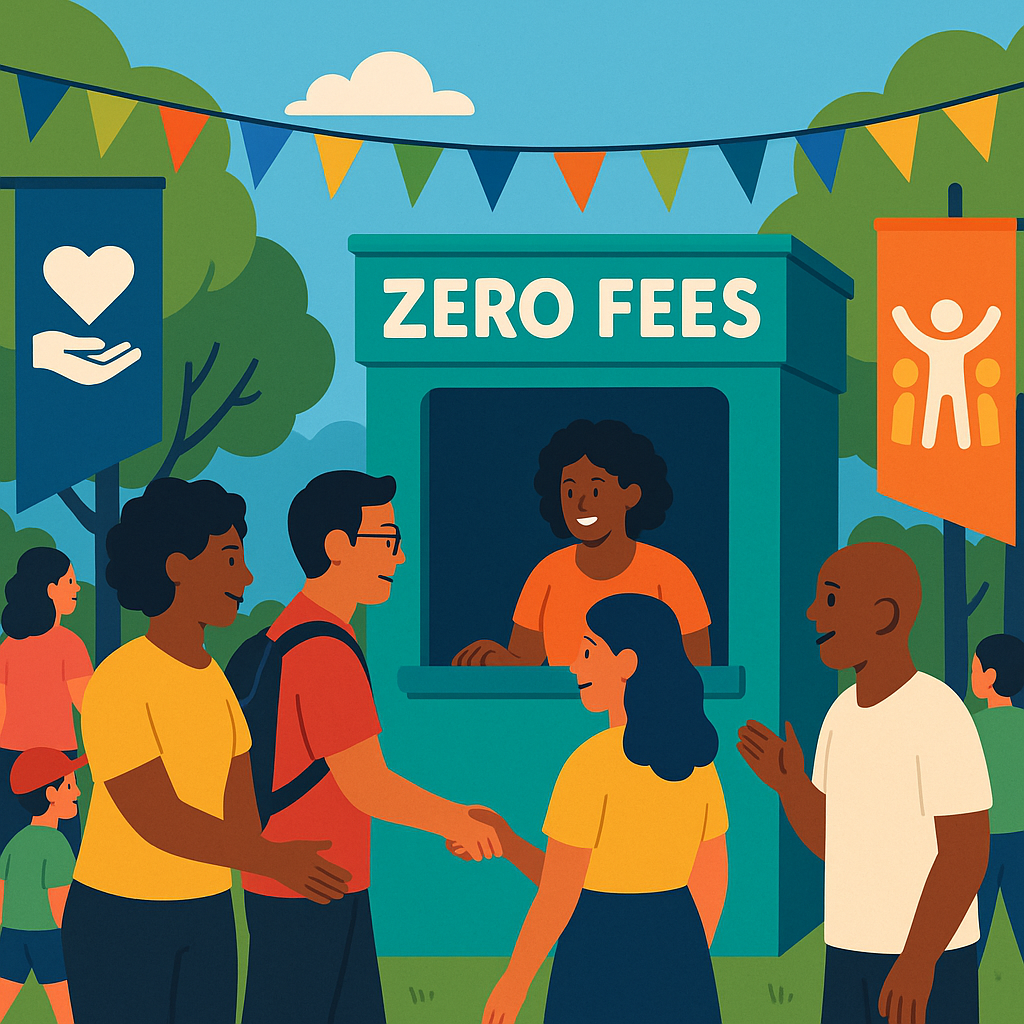
Let’s talk about ticketing fees. It’s one of those costs that nonprofits often accept as inevitable, but it’s actually draining their budgets. Platforms like Eventbrite and Ticketmaster trade on convenience, offering easy-to-use tools for ticketing and promotions—but at a steep price. Most nonprofits don’t think twice about these fees, even though they can siphon off 5-10% of every ticket sale. For a small community group running 10 events a year, that’s easily $1,500 gone. Now imagine explaining to your donors why their contributions are funding platform profits instead of programs. Not ideal.
Here’s a concrete example:
Imagine a local arts nonprofit hosting monthly workshops with $20 tickets. Using Eventbrite, they’ll lose $2 in platform fees per ticket, plus another $0.70 in PayPal processing fees. For 500 tickets annually, that’s $1,350 in fees. Meanwhile, a zero-fee platform like CommunityTix keeps all but the unavoidable $0.70 PayPal fee in your pocket, saving $1,000 per year—enough to fund an extra workshop or invest in better equipment.
Actionable Steps:
- Audit Your Ticketing Costs: Review your ticketing platform fees over the past year. How much are you losing, and how could that money be reallocated?
- Explore Zero-Fee Alternatives: Platforms like CommunityTix eliminate ticketing fees and offer straightforward tools for events. Start with one smaller event to test the waters.
- Communicate Savings to Donors: Use the shift to a zero-fee platform as a talking point in your donor communications. Highlight how their contributions will have a bigger impact.
Flexible Pricing: Equity in Action
One of the standout points from Beam’s advocacy was the emphasis on inclusivity. In the events industry, diversity and accessibility are becoming central goals. Nonprofits face similar challenges, particularly when ticket pricing becomes a barrier for underserved communities. That’s where flexible pricing models come in.
Case Study: Pay What You Can Pricing
CommunityTix offers a Pay What You Can (PWYC) feature, which allows nonprofits to set a suggested ticket price while giving attendees the flexibility to pay what they can afford. For equity-focused events, this feature can be a game-changer.
Take, for example, a cultural association hosting an annual heritage festival. They might set a suggested ticket price of $10 but allow attendees to pay as little as $1. The result? Increased accessibility for lower-income individuals and families, without completely sacrificing revenue. In fact, studies show that PWYC events often outperform fixed-price ones because attendees who can afford more tend to pay extra. For instance, one nonprofit reported a 25% increase in net revenue after switching to PWYC for their annual gala.
Actionable Steps:
- Analyze Your Audience: Assess whether your current pricing model is excluding key demographics. Use surveys or post-event feedback to gauge attendee sentiment.
- Pilot PWYC Events: Test the Pay What You Can model with one or two events to measure its impact on attendance and revenue.
- Promote Transparency: Clearly communicate why you’re adopting flexible pricing and how it aligns with your mission.
Centralized Tools: No More Fragmentation
Fragmented tools are another silent killer for nonprofits. If you’re juggling spreadsheets for member lists, emails for RSVPs, and a separate website for event promotions, you’re not alone—but it’s a problem. This kind of fragmentation leads to inefficiencies, lost data, and a higher likelihood of errors.
Example: Streamlining Event Operations
Consider this: A small nonprofit running a charity auction used three separate tools—a ticketing platform, a CRM for donor data, and email marketing software. Switching to an all-in-one platform like CommunityTix saved them 10 hours of admin work per month. More importantly, it eliminated data silos, allowing them to track donor engagement more effectively and increase repeat attendance by 15%.
Platforms like CommunityTix unify ticketing, RSVPs, member management, and even event websites, giving you a one-stop shop for event operations. Plus, because it’s open-source, you own your data outright—no vendor lock-in.
Actionable Steps:
- Evaluate Your Tech Stack: List all the tools you currently use for event management and identify overlaps or inefficiencies.
- Prioritize Integration: Look for platforms that offer multiple features under one roof or integrate seamlessly with your existing tools.
- Train Staff: Invest time in training your team to fully leverage the features of a centralized platform.
What Nonprofits Can Learn From Beam’s Approach
Beam’s push for policy change demonstrates the power of advocacy and collective action. Nonprofits can take a similar approach when it comes to their event technology choices. Don’t settle for platforms that eat into your budget or limit your flexibility. Instead, advocate for tools and practices that reflect your organization’s values—equity, transparency, and community ownership.
Decision Framework: Choosing the Right Platform
| Feature | Eventbrite | CommunityTix |
|---|---|---|
| Platform Fees | ~5-10% per ticket | None |
| Pay What You Can | No | Yes |
| Data Ownership | Limited | Full (open-source) |
| All-in-One Functionality | Partial | Comprehensive |
| Cost for 500 Tickets | ~$1,350 in fees | ~$350 (PayPal only) |
This comparison table shows just how much nonprofits stand to gain by making more intentional choices about their event tech.
FAQs
Q: How much can nonprofits save with zero-fee ticketing? A: On average, nonprofits save $318-$400 per event. Annual savings can exceed $2,500 for organizations running multiple events.
Q: Is CommunityTix hard to use? A: Not at all. It’s designed for non-technical users with simple workflows for creating events, tracking RSVPs, and managing members.
Q: What’s the catch with zero fees? A: There’s no catch. The only fees are standard PayPal processing charges, which apply to all platforms.
Q: Can I run free events on CommunityTix? A: Absolutely. You can create RSVP-based events with capacity limits and automatic confirmation emails.
Q: Does CommunityTix work for hybrid or in-person events? A: Yes, it supports on-site payment tracking for cash and card transactions.
Call to Action
If you’re tired of losing money to ticketing fees or juggling fragmented tools, CommunityTix can help. Get started free and keep every dollar you earn. Make smarter choices today, and your nonprofit will thank you tomorrow.