How Flexible Pricing Can Transform Community Events
I’ll be honest. When I first started helping community groups plan events, I thought fixed ticket prices were non-negotiable. It felt like the easiest way to organize things — one price, one simple system, no headaches. People pay, they attend, end of story. But after learning more about how leading event organizers approach pricing, I realized that sticking to fixed prices might actually be limiting the potential of small community events.
What changed my mind? Two words: inclusivity and flexibility.
The Moment Everything Shifted
I attended a session about ticket pricing strategies where a speaker shared how flexible pricing models were driving higher attendance for events aimed at diverse audiences. They explained how offering attendees the option to choose from suggested price points or enter their own amount could make events more accessible. This approach not only increased attendance but also encouraged some attendees to contribute more than the suggested price.
I couldn’t help but think of the community center I work with back home. We run events like cultural festivals, fundraisers, and workshops. We’ve always set fixed prices for tickets, figuring it was the fairest way to cover costs. But we’d often struggle to sell out, and some members would tell us they couldn’t afford it. Others, who could afford more, weren’t given the opportunity to contribute beyond the set price.
Why Fixed Pricing Made Sense (Or So I Thought)
Looking back, I see why I held onto fixed pricing for so long. It’s straightforward. One price, one transaction, no confusion. It’s what platforms like Eventbrite assume you’ll do, and frankly, it’s what most of us default to.
But simplicity isn’t the same as success. Fixed pricing doesn’t account for the unique financial situations of your members. Someone attending a local heritage festival might not have the same budget as someone attending a workshop on sustainable gardening. And when your audience feels boxed into a price that doesn’t fit their circumstances, they’re less likely to show up.
What I Do Differently Now
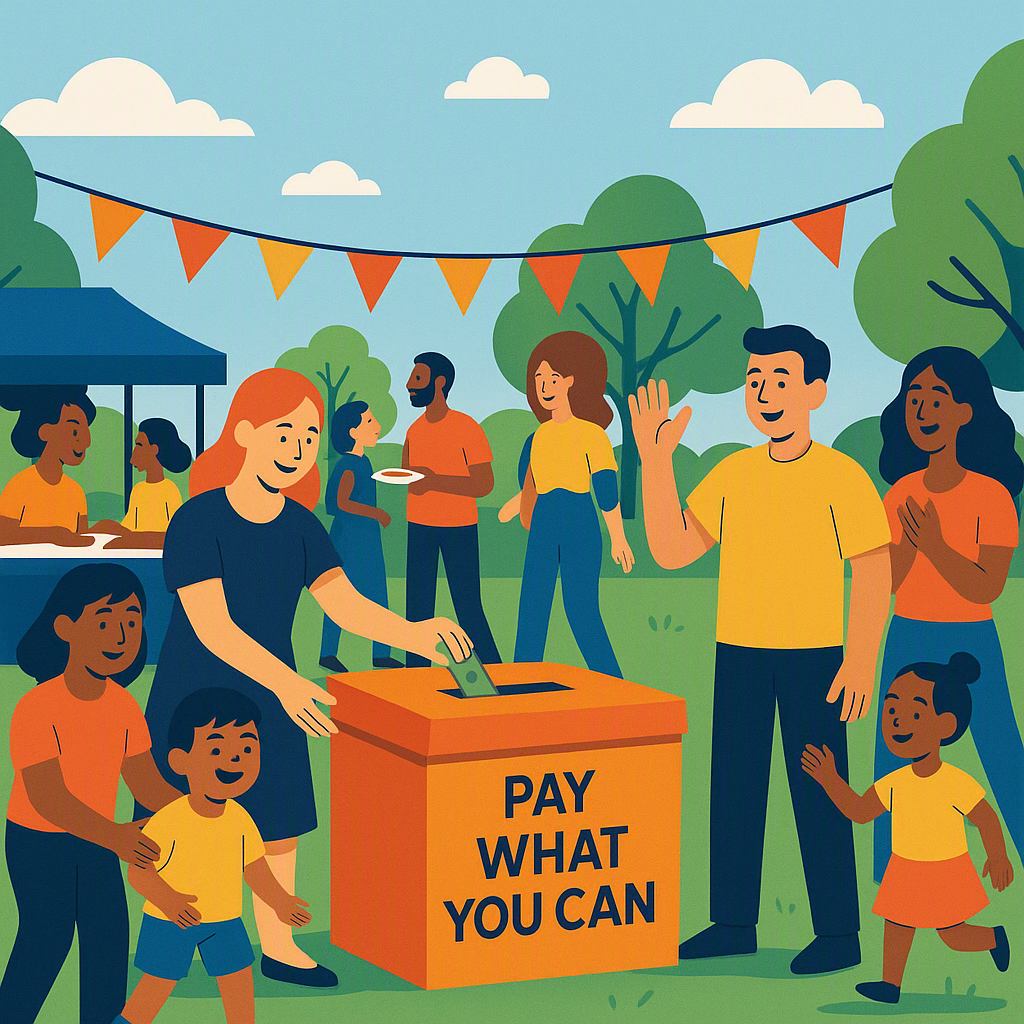
Inspired by the session, I started experimenting with Pay What You Can (PWYC) pricing for some of our events. Here’s how it works:
- Set suggested price points: Instead of one fixed ticket price, we offer multiple options — for example, a “standard” price, a “community” price for those who need it, and a “supporter” price for those who can contribute more.
- Allow custom contributions: Attendees can enter their own amount if none of the suggestions work for them.
- Be transparent: We explain why we use PWYC — to make events accessible while encouraging those who can afford to give more.
Illustrative example — Let’s say you’re hosting a local music festival. You might set a standard ticket price of ₹500, a community price of ₹300, and a supporter price of ₹800. You also allow attendees to enter their own amount if they prefer. This way, you cater to a broader audience while still covering your costs.
What Being Wrong Cost
I’ll admit, switching to PWYC wasn’t entirely smooth sailing. Some attendees were confused at first and worried they’d pick the “wrong” price. We had to explain clearly that every contribution — big or small — was appreciated and would go directly to supporting community programs.
And I’m still figuring out the best way to structure suggested amounts. Should we keep the “supporter” price high to encourage generosity, or make it more attainable to boost participation? There’s no one-size-fits-all answer, and that’s okay.
Takeaways for Community Events
Here’s what I learned that’s most relevant to community events:
- Inclusivity matters: Attendees want to feel like they belong, and pricing is a big part of that.
- Flexibility drives engagement: Giving people options and control over their contributions builds goodwill and increases participation.
- Transparency builds trust: When you explain your pricing choices, people are more likely to support your event — and your mission.
FAQ
Is Pay What You Can pricing sustainable for small orgs?
Yes, but it requires careful planning. Start small — try PWYC for one event and see how it goes. Monitor attendance and revenue closely.
What if people pay less than the suggested price?
It happens, but often people pay more. The key is to balance suggested price points so you’re still covering costs.
How do I avoid confusion with PWYC?
Clear communication is critical. Explain the purpose of PWYC on your event page and in promotional materials. Make it easy for people to understand their options.
The Opportunity for Community Groups
Community events are all about connection, and your pricing strategy should reflect that. Fixed prices might work for some audiences, but if inclusivity is part of your mission, PWYC is worth exploring. It’s not just a pricing model — it’s a way to align your values with your event strategy.
If your ticketing platform doesn’t support PWYC, consider exploring tools that do. Platforms with built-in PWYC features can simplify the process and help you focus on what matters most: creating meaningful community connections.