I Used to Think Fixed Pricing Was the Only Way
For years, I believed that fixed ticket pricing was the best — maybe even the only — way to manage event revenue for non-profits. You set a price, you sell tickets, you get the money, and you move on. Simple, right? This logic seemed airtight to me. I’d say things like, “A clear price makes it easier to budget,” or “People trust it more — it’s straightforward.”
I thought flexible pricing was risky. What if people just paid pennies? Or nothing at all? Surely, we’d lose money. And yet, I kept noticing something strange at our community events: we were leaving people out. Members who were struggling financially wouldn’t even show up because they couldn’t afford the ticket price. Worse, those who could afford more were still paying the minimum. It felt like the system was forcing us into a one-size-fits-all model — which didn’t reflect the diversity of our community.
The Thing That Changed It
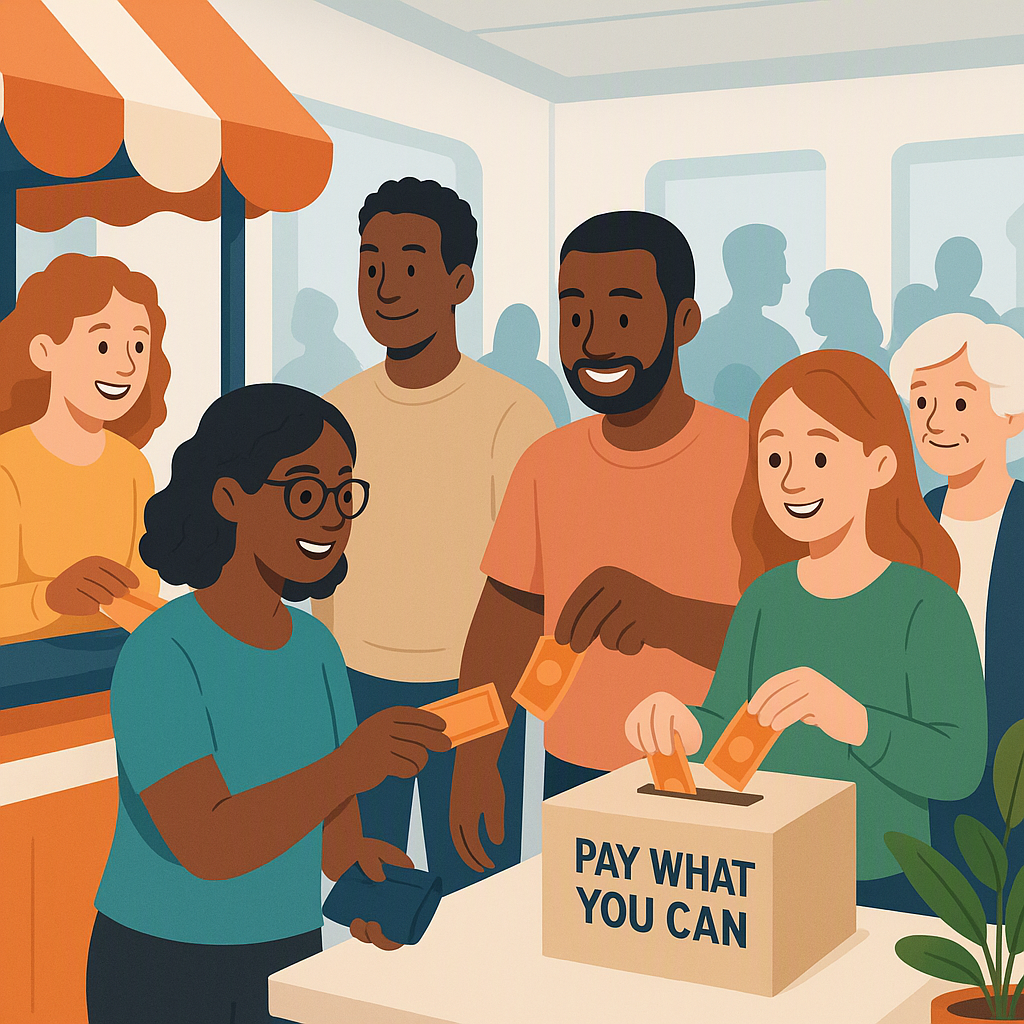
In 2023, one of our neighboring community groups introduced Pay What You Can (PWYC) pricing for their annual heritage festival. They used a ticketing platform to set up three suggested price points — $5, $10, and $20 — and let attendees choose what they could afford. They also included a custom field for people who wanted to pay more.
The results were eye-opening. Flexible pricing allowed them to reach a broader audience, including individuals who might have skipped the event due to financial constraints. Additionally, many attendees chose to pay more than the minimum suggested amount, demonstrating that people are often willing to support causes they care about when given the opportunity.
This wasn’t just anecdotal. Research supports these findings. A study published in the Journal of Behavioral and Experimental Economics found that people are more likely to pay higher amounts under PWYC models when they feel a strong connection to the cause or product. Source
Why I Held Onto My Old Belief
Looking back, I think a lot of my reluctance came down to fear. Fixed pricing felt safe. Predictable. You could crunch the numbers, know exactly how much revenue your event would generate, and plan accordingly. It was comfortable.
There was also a sense of fairness that fueled my belief. I thought, “If tickets are the same price for everyone, that’s fair.” But fairness isn’t the same as equity. Fairness assumes everyone can pay the same amount — equity considers that not everyone can afford to. Equity focuses on creating opportunities for everyone to participate, regardless of their financial situation.
And honestly? I was worried about how PWYC pricing would look to donors and sponsors. Would they see it as unprofessional or chaotic? It turns out, they didn’t. In fact, many appreciated the transparency and inclusivity it brought to the event. A 2021 report by the Institute for Nonprofit News found that donors are increasingly looking to support organizations that take equitable approaches, including pricing strategies. Source
What We Do Differently Now
After learning from the experiences of others, we decided to test PWYC pricing for our 2024 community gala. We set up three tiers — $10, $25, and $50 — using a flexible pricing feature. We also included a custom field for donations above $50.
How It Worked
-
Suggested Tiers: We offered three price points to accommodate different financial situations. These tiers weren’t arbitrary; they were based on historical ticket prices and feedback from previous attendees.
-
Custom Donation Field: Attendees who wanted to support the event at a higher level had the option to do so. This feature was easy to implement using our event management platform.
-
Clear Communication: We explained the reasoning behind the pricing model. Messaging was key: we emphasized that the flexible pricing model was designed to make the event accessible to everyone while ensuring that attendees who could contribute more had the opportunity to support the cause.
-
Data Tracking: We used a platform that allowed us to track payments by tier, making it simple to analyze revenue patterns and attendee behavior afterward.
Results
This approach not only made the event more inclusive but also encouraged attendees to contribute in a way that aligned with their financial capacity. For instance, we noticed that about 20% of attendees chose the highest tier, while 10% used the custom donation field to contribute amounts above $50. This alone generated more revenue than we would have collected under a fixed $20 ticket price.
We’ve since extended PWYC pricing to smaller events, like community movie nights and workshops. While these events typically bring in less revenue overall, the sense of inclusivity and goodwill they foster has strengthened our community relationships immeasurably.
What Being Wrong Cost Us
I can’t help but wonder how much revenue we missed out on during the years we stuck to fixed pricing. And not just revenue — relationships. How many people felt excluded from our events because they couldn’t afford the ticket price? How many potential donors or sponsors saw our fixed pricing as rigid or outdated?
PWYC pricing isn’t a panacea. It may not work for every type of event. High-cost events, like galas with expensive catering, might require a base ticket price to cover costs. However, for events where the primary goal is community engagement and inclusivity, PWYC pricing is often a better fit.
PWYC vs. Fixed Pricing: A Comparison
| Factor | Fixed Pricing | Pay What You Can (PWYC) |
|---|---|---|
| Predictability | High — revenue is consistent. | Moderate — revenue can fluctuate. |
| Accessibility | Low — excludes those with lower incomes. | High — accommodates diverse budgets. |
| Community Goodwill | Moderate — straightforward but rigid. | High — perceived as inclusive and fair. |
| Attracting Donors | Neutral — may seem outdated. | Positive — reflects modern, equitable values. |
| Administrative Ease | High — simple to set up and track. | Moderate — requires clear communication and tracking tools. |
Common Questions About PWYC Pricing
1. Won’t people just pay the lowest amount?
Not necessarily. Studies and real-world examples show that most people value fairness. They’ll often pay more than the minimum if they believe in the cause or enjoy the event. Clear communication about where the money goes can also encourage higher contributions.
2. How do you set suggested price points?
Start by looking at your event’s typical fixed ticket price. Expand the range to include a lower and higher option. For example, if your fixed ticket is $20, set tiers at $10, $20, and $30. Include a custom field for those who want to donate even more.
3. What if my audience isn’t familiar with PWYC pricing?
Educate them. Use email campaigns, event pages, or social media to explain how PWYC works and why you’re using it. Transparency about making events accessible goes a long way in gaining trust.
4. Does PWYC hurt your revenue?
In most cases, no. While some attendees may pay less, others often pay more. The key is to analyze event data and adjust your suggested price points over time to optimize revenue.
5. Is PWYC suitable for all events?
Not always. For high-cost events, a base ticket price might be necessary to cover expenses. However, PWYC works exceptionally well for community-focused events, workshops, and festivals.
Conclusion
If you’re still using fixed ticket pricing for your non-profit events, it’s time to reconsider. PWYC pricing isn’t just about revenue — it’s about accessibility, equity, and community. Flexible pricing models make it easier to include everyone while allowing those who can contribute more to do so. With the right tools, thoughtful communication, and a willingness to adapt, PWYC pricing can transform how your organization connects with its community and generates support.