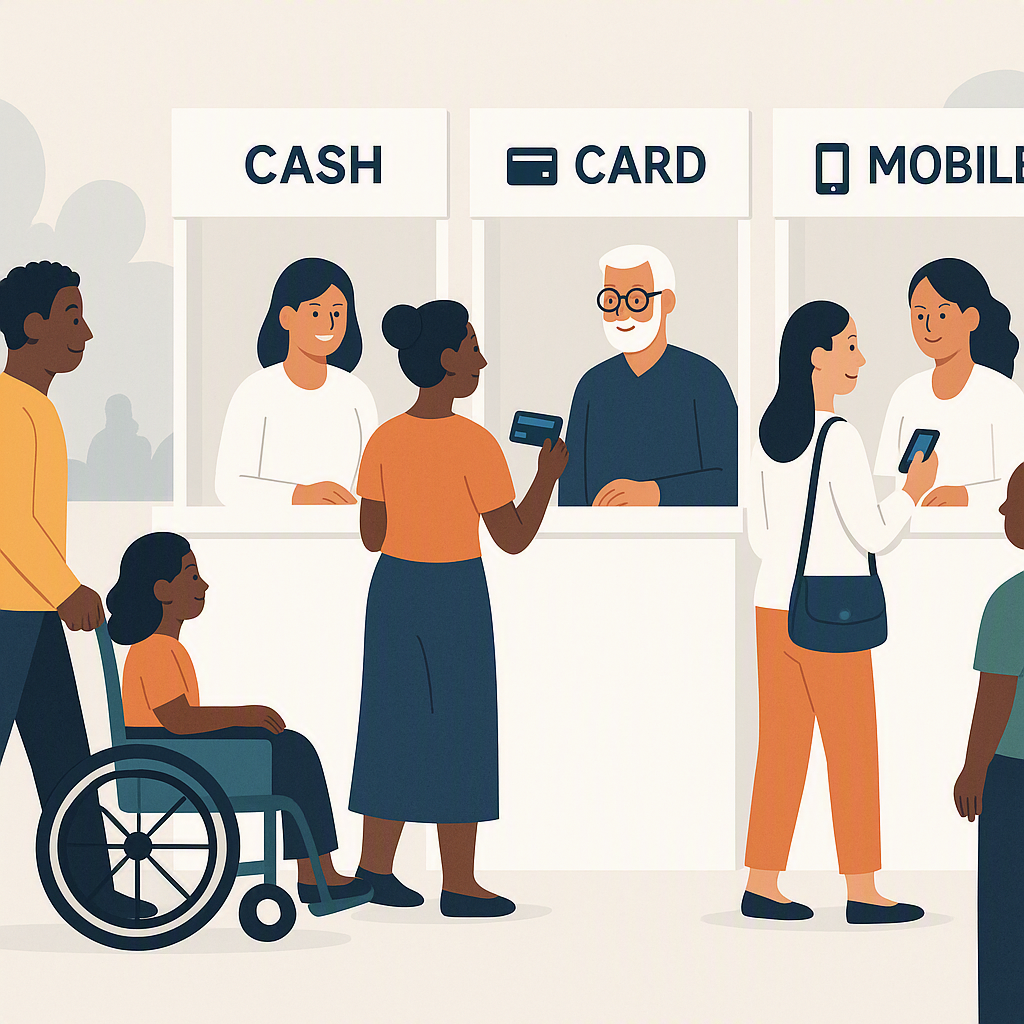
The Problem with One-Size-Fits-All Pricing
Let me start by saying this: I used to think ticket prices had to be fixed. Set the price, sell the tickets, and move on. Simple, right? I was wrong.
A few years back, I helped organize a small fundraiser for a local cultural association in Boston. We needed to raise money, but we also wanted the event to be inclusive and accessible to everyone in the community, regardless of their ability to pay. Setting the right ticket price became a guessing game. Too high, and we'd alienate people who couldn't afford it. Too low, and we'd never meet our fundraising goals. We settled on $20 per ticket, but it just didn’t sit right.
Then, on the day of the event, something happened. A woman came up to our volunteer table and said she couldn’t afford $20 but wanted to donate $10. She told us she’d been looking forward to the event for weeks. What were we supposed to do? Turn her away? We took her $10, of course, but it got me thinking—how many others didn’t show up because they thought they couldn’t afford it? How much money did we leave on the table by not offering a way for people to pay more if they wanted to?
Enter Flexible Ticket Pricing
That’s when I first heard about Pay What You Can (PWYC) pricing. The idea is simple: instead of charging a flat fee, you let attendees choose how much they can afford to pay within a suggested range—or even offer the option to pay nothing at all. It’s not about guilt-tripping people into donating more. It’s about giving everyone, regardless of income, a chance to participate while still allowing those who can afford to give more to do so.
Platforms like CommunityTix make this incredibly easy. Unlike Eventbrite or other big-name ticketing systems that lock you into fixed prices, CommunityTix lets you set up to three suggested price points and even allows a custom amount field. This means you can suggest, say, $10, $20, and $30, but someone can choose to pay $50 if they’re feeling generous—or $5 if that’s all they can manage.
Why Flexible Pricing Works
Flexible pricing works because it meets people where they are financially, while still allowing for generosity. In traditional ticketing models, you risk alienating potential attendees—including people who might be your biggest supporters—by setting prices that are either too high or too low. PWYC pricing removes this barrier by putting the choice in the hands of your audience.
For example, consider a community group hosting a music recital. A fixed $20 ticket price may deter students or families on tight budgets, while wealthier attendees may see the ticket price as arbitrary and fail to recognize the value of the event. With PWYC pricing, those who can only afford $5 can still attend, while others may happily pay $50, $100, or more because they appreciate the cause.
Actionable Steps to Implement Flexible Pricing
-
Calculate Your Costs: Start by understanding your event’s budget. Include venue rental, marketing, equipment, and other expenses. Divide this total by the estimated number of expected attendees to find a baseline ticket price.
-
Set Suggested Price Points: Offer three price tiers: one below your baseline, one at the break-even point, and one above it. This creates a psychological anchor for attendees to choose based on their means.
-
Include a Custom Field: Always enable a custom amount option. This allows particularly generous attendees to contribute beyond your suggested levels or lets attendees pay less if needed.
-
Communicate Transparency: Clearly explain why you’re using PWYC pricing. Share how the funds will be used and emphasize inclusivity. Transparency builds trust and encourages generosity.
-
Test and Optimize: Start with one event to gauge responses. Track revenue data and attendee feedback to refine your suggested price points for future events.
Why Traditional Ticketing Systems Fall Short for Non-Profits
When you’re running a small non-profit or community group, every dollar counts. It’s not just about covering event costs—it’s about funding your programs, supporting your volunteers, and keeping your mission alive. That’s why it’s infuriating when ticketing platforms like Eventbrite or Ticketmaster take a 5-10% cut of every ticket you sell.
The Cost of High Fees
A typical community fundraiser might sell 200 tickets at $25 each. On Eventbrite, you’d lose around $318 in fees (source). That’s money that could pay for supplies, marketing, or even be reinvested into future events. With CommunityTix, you keep 100% of your ticket revenue, minus standard PayPal processing fees. It's not just affordable—it’s fair.
Lack of Flexibility
Most traditional platforms operate on fixed pricing models, which work fine for concerts or conferences where attendees usually have similar budgets. But community events attract a range of people—from college students scraping by on loans to retired professionals who want to support a good cause. Fixed pricing doesn’t accommodate this diversity, leaving money on the table and excluding potential attendees.
| Feature | Eventbrite/Ticketmaster | CommunityTix |
|---|---|---|
| Platform Fees | 5%-10% of ticket price | Zero fees (only PayPal fees) |
| Flexible Pricing Models | Limited or none | Fully customizable PWYC |
| Data Ownership | Platform-controlled | Organizer-owned |
| Support for Non-Profits | Minimal | Dedicated resources |
How to Implement PWYC Pricing: A Real-World Example
Let’s say you’re organizing a local food festival in Austin, Texas. You’ve got a mix of attendees: families, students, and older residents. The event costs $3,000 to run, and you’re expecting 300 attendees. A flat $10 ticket price would break even, but it might deter some people. What if you set up PWYC pricing with suggested amounts of $5, $10, and $15, plus a custom option?
Here’s how it could play out:
| Price Point | Attendees | Total Revenue |
|---|---|---|
| $5 | 100 | $500 |
| $10 | 150 | $1,500 |
| $15+ | 50 | $750 (average $15 each) |
| Total | 300 | $2,750 |
This is just an illustrative example, but it shows the potential. Notice how the flexibility allows you to accommodate everyone while still coming close to your goal. Plus, some people might surprise you with their generosity.
Why Data Ownership Matters
Another thing I didn’t think about back then was data. Most big-ticketing platforms own your event data, from attendee lists to email addresses. That’s a huge missed opportunity. With CommunityTix, you keep all your data. You can export attendee lists, track RSVPs, and use the built-in blog to keep your community engaged long after the event is over.
Why Data Matters
Data is the lifeblood of any non-profit. It allows you to build meaningful relationships with your supporters, follow up with donation requests, and measure the impact of your events. When you own your data, you have the freedom to use it for your own growth—not the platform’s.
The Future of Non-Profit Event Ticketing
As more non-profits discover the benefits of flexible pricing and transparent, no-fee ticketing, I think we’ll see a shift away from traditional platforms. Why pay more for less flexibility? Why give up control of your data? It doesn’t make sense.
That said, switching platforms isn’t always easy. If you’re using spreadsheets or a legacy system, the idea of moving everything to a new platform can feel overwhelming. That’s why it’s critical to choose a tool that’s designed with non-profits in mind. CommunityTix, for example, offers straightforward guides and community support to help you get started. Plus, their 30-day free trial gives you plenty of time to test the waters before committing.