Safe Listening Practices: Enhancing Community Event Safety
Hearing health is often overlooked in live events, but it’s a critical aspect of attendee safety. Prolonged exposure to loud music or noise can cause permanent damage. According to the World Health Organization, over 1 billion young people are at risk of hearing loss due to unsafe listening practices. This issue spans concerts, festivals, community events, and cultural gatherings.
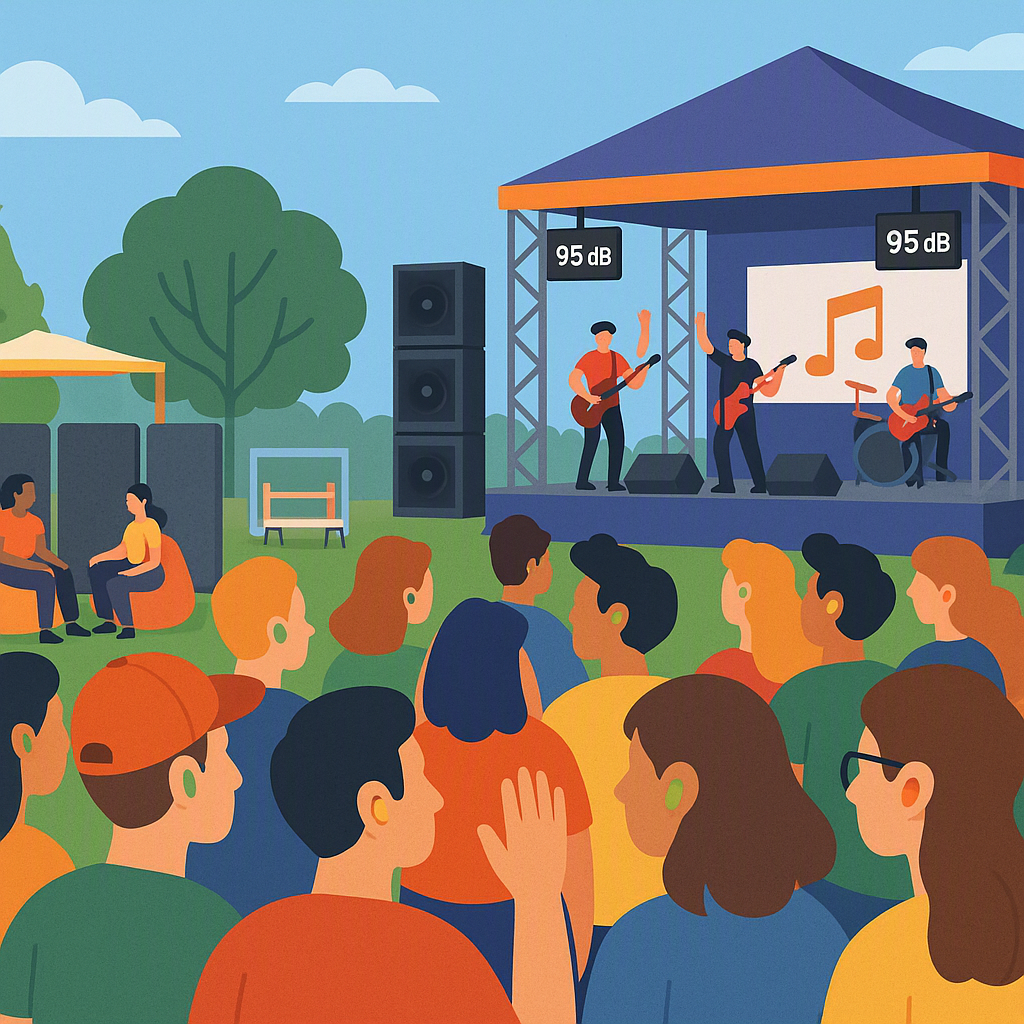
Event organizers can take proactive steps to address this issue. By implementing measures like decibel monitoring, quiet zones, and providing ear protection, they can create safer and more inclusive environments for attendees. These practices are practical and can be adapted to suit events of any size.
Why Hearing Health Should Matter to Community Events
Community events often overlook hearing health, assuming it’s only relevant for large music festivals. However, this is a misconception. Here’s why hearing health should be a priority:
- Diverse audiences, diverse needs. Community events often attract families, seniors, and children. Noise levels that seem acceptable for some attendees may be overwhelming or harmful for others.
- Repeat attendance matters. Events that prioritize attendee comfort and safety are more likely to build trust and encourage repeat attendance. Measures like controlled noise levels and quiet zones demonstrate care for the audience.
- Regulations are evolving. In many countries, noise exposure laws already apply to workers. It’s possible that similar regulations will eventually extend to public events. Preparing for these changes now can save time and resources later.
Practical Steps to Implement Safe Listening Practices
If you’re a small community group with limited resources, implementing safe listening practices might feel daunting. However, it can be achieved with simple, cost-effective steps:
1. Monitor Noise Levels
Invest in or rent a decibel meter to check sound levels at different points during your event. Aim to keep noise levels under 85 decibels for prolonged exposure.
2. Offer Ear Protection
Distribute earplugs at the entrance. Bulk packs are affordable, and attendees will appreciate this thoughtful gesture. You can even brand them for added visibility.
3. Create Quiet Zones
Designate a space away from the main activity for people to recharge. This could be a side room, a tent, or a seating area with noise-reducing panels. Ensure it’s clearly marked on your event map.
4. Communicate with Your Audience
Let attendees know what measures you’re taking to protect their hearing. Include this information in event emails, on your website, and in signage at the venue. Transparency builds trust and encourages participation.
5. Leverage Technology
Use event management tools to streamline logistics. Platforms like CommunityTix allow you to add event details about safe listening measures directly to your event pages. You can also use RSVP systems to gauge attendance and ensure quiet zones are adequately staffed.
Common Questions About Safe Listening Practices
1. How do I know what’s too loud?
Use a decibel meter. Anything above 85 decibels for extended periods is risky. For reference, normal conversation is about 60 decibels.
2. Do I need to hire a sound engineer?
Not necessarily. For small events, basic monitoring and adjustments to the volume are often enough. For larger events, it’s worth considering professional assistance.
3. Can I charge for earplugs?
Yes, but make sure they’re affordable. Use Pay What You Can pricing if possible. Event management platforms can help you set this up easily.
4. What if my venue is already noisy?
You can still create quieter areas. Use soundproof dividers or position the quiet zone as far from the main activity as possible.
5. Do attendees actually care about this?
Many attendees appreciate measures that prioritize their safety and comfort. It’s an opportunity to enhance their experience and build goodwill.
Final Thoughts
Safe listening practices are not just a nice-to-have; they’re a must-have for community events. By being thoughtful and making small changes, organizers can create a safer and more enjoyable environment for attendees.
If managing these logistics sounds overwhelming, CommunityTix is here to help. From ticketing to member management, it simplifies event planning so you can focus on what matters: your community. Get started free →