Why Ticket Pricing Can Make or Break Your Event
Ever been to a community event where half the seats were empty? It’s frustrating, right? The vibe feels off, the energy is low, and all that planning seems wasted. The culprit? Often, it’s the ticket pricing.
Rigid pricing models assume everyone can (or will) pay the same amount. But that’s not how real communities work. Some people can afford more; others can’t. And when pricing feels too high, people second-guess attending. That’s bad news for any community event because fewer attendees mean fewer connections, less energy, and, ultimately, a less impactful event.
So, how do you fix it? You move to flexible pricing. Specifically, a “Pay What You Can” (PWYC) model. Let’s break down why it works and how it can create the conditions for focus, creativity, and connection at your events.
What Is Pay What You Can Pricing?
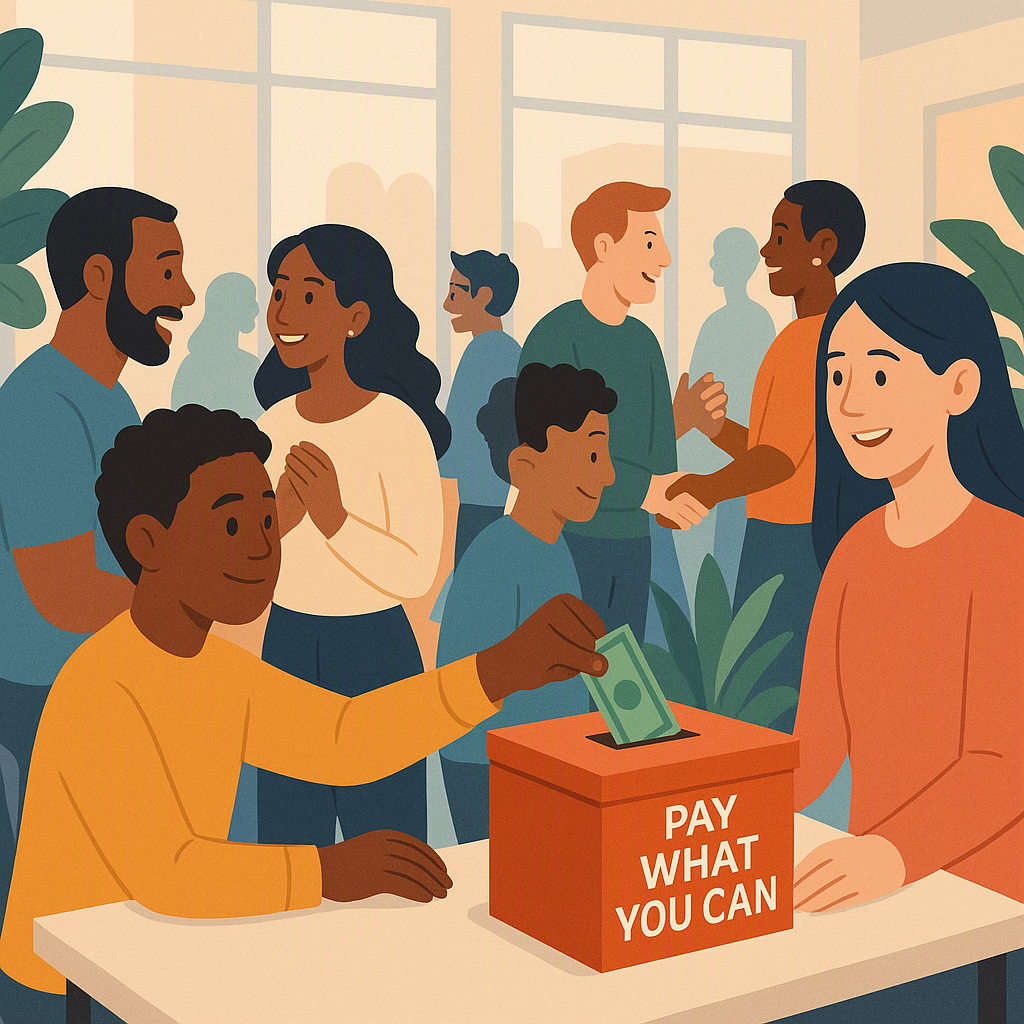
Pay What You Can pricing means attendees choose how much they want to pay for a ticket. It’s not a free-for-all—organisers can suggest multiple price points, often with a recommended amount and the option for attendees to pay more or less.
For example:
Illustrative example — Suggested PWYC pricing for a local cultural festival:
- $10 (low-income ticket)
- $20 (recommended ticket)
- $50 (community supporter ticket)
- Custom amount (enter your own)
This method acknowledges that not everyone has the same financial means while giving more affluent attendees a chance to support the event at a higher level. It’s a simple idea, but it can have a profound impact.
How PWYC Pricing Boosts Focus
When you’re planning a community event, financial stress can be a creativity killer. You’re worried about breaking even, let alone creating a memorable experience.
Switching to a zero-platform-fee tool lets you keep more of your revenue (minus standard processing fees). Pair that with PWYC pricing, and you can focus less on how much money you’ll make and more on how to make your event unforgettable.
Illustrative example — Savings from reduced fees could be used to pay local artists to showcase their work or to bring in a community band for live music. These touches not only elevate the event but also deepen its relevance to your audience.
How PWYC Pricing Encourages Creativity
Let’s face it: When you know your event is affordable and accessible, you’re more likely to experiment with new ideas. Why? Because the financial risk is lower, and you’re not limited to catering to a single income bracket.
Illustrative example — Hosting a neighborhood film night with PWYC pricing could allow you to suggest a modest price but also offer a higher-tier option for those who want to support future events. The extra revenue could fund a popcorn machine, a projector upgrade, or even a follow-up event. Plus, you won’t alienate anyone who can’t afford the full ticket price—they can still attend and contribute what they can.
Fostering Connection Through Inclusive Pricing
High ticket prices can exclude the very people who need community events the most. That’s a problem, especially if your event’s mission is to build bridges or celebrate diversity.
When everyone can afford to attend, your event becomes a true community gathering—one where people from all walks of life can come together, share experiences, and forge connections. That’s the magic of PWYC pricing. It’s not just about filling seats; it’s about filling them with diverse voices and perspectives, which leads to richer, more meaningful interactions.
Illustrative example — A local heritage society could use PWYC pricing for an event celebrating traditional crafts. They might suggest $5 for low-income attendees, $15 as the standard ticket, and $30 for those who want to support the artisans. By offering these options, they remove financial barriers while still giving attendees the power to contribute.
Common Misunderstandings About PWYC Pricing
You might be thinking, “Won’t people just pay the lowest price—or nothing?” It’s a fair concern, but experience shows otherwise. When you’re transparent about costs and where the money goes, people tend to pay fairly. Some even pay more. The key is trust and clear communication.
Another worry might be the logistics of managing multiple price points. Modern tools can simplify this process, handling everything from setting up PWYC pricing to tracking payments—so you can focus on what really matters: creating an amazing event.
Practical Tips for Implementing PWYC Pricing
- Be Transparent: Let attendees know how their contributions will be used. Whether it’s to cover venue costs or fund future events, people appreciate knowing their money is making an impact.
- Offer a Range: Include multiple suggested price points and a custom option. This gives attendees flexibility while subtly encouraging higher contributions.
- Promote Fairness: Emphasize that the model is about inclusion and fairness, not charity. It’s about everyone contributing what they can.
- Leverage Data: Use tools to track which price points are most popular. This insight can guide future events.
Common Questions About PWYC Pricing
1. Does PWYC pricing work for all types of events?
Not always. It works best for community-focused events where attendees share a sense of responsibility. For high-end galas or for-profit events, it might not be the best fit.
2. How do I handle people who pay nothing?
It happens, but it’s rare. Most people want to contribute, especially if they see the value in your event. And those who can’t pay often bring non-monetary value, like spreading the word or volunteering.
3. What’s the biggest challenge with PWYC pricing?
The biggest challenge is trust—both from your community and yourself. You have to trust that people will contribute fairly. But in many cases, they do.
Final Thoughts: Connection Over Commerce
At the end of the day, community events are about building connections, not just generating revenue. PWYC pricing helps you focus on what really matters: creating inclusive, creative, and impactful experiences.
If you’re ready to simplify your event planning and try flexible pricing, explore tools that make it easy to implement and manage PWYC models.