I Used to Think Translation Services Were Overkill
For years, I believed multilingual staffing wasn’t necessary for small community events. Sure, it made sense for big trade shows or international exhibitions—places where every booth had a global audience. But a local cultural festival? An ethnic association’s annual dinner? I thought it was a luxury these groups couldn’t afford, and frankly, didn’t need.
My logic felt sound at the time. Most community events rely on tight budgets and even tighter volunteer schedules. Adding professional language support seemed like a stretch, especially when most attendees spoke the local language. Why complicate things?
What Changed My Mind
Then I read about TranslateAble’s Multilingual Stand Staffing. TranslateAble, the only language agency dedicated solely to the events industry, launched this service to embed trained language professionals directly into exhibitor teams at trade shows and exhibitions. According to Event Industry News, the service is designed to help exhibitors overcome language barriers and build stronger connections with international buyers.
At first, I dismissed it as something suited only for corporations—another tool for companies courting international clients. But the case studies grabbed me. One example stuck: a trade show in the UK where exhibitors used multilingual staff to connect with buyers who otherwise would’ve walked away. TranslateAble didn’t just help with casual conversations; they bridged communication gaps that led to deals.
That made me wonder—how many connections were slipping through the cracks at smaller community events because of language barriers?
It wasn’t just about international business. The idea of making events more inclusive, no matter their scale, began to resonate. Community events aren’t just about logistics or budgets—they’re also about people, relationships, and shared experiences. Language can make or break that connection.
Why My Old Belief Held Up for So Long
I wasn’t entirely wrong. Most grassroots events operate in familiar linguistic territory. If your community center serves predominantly Gujarati speakers, you’re likely to focus your outreach in Gujarati. Makes sense, right?
But here’s the blind spot: these events are often more diverse than organizers realize. Think about a cultural festival. Families bring friends who don’t share the same background. Local businesses sponsor booths to reach new audiences. Even a neighborhood fundraiser can draw people who aren’t fluent in the dominant language. I’d been ignoring that dynamic.
The Budget Conundrum
And let’s be honest—budget constraints are a valid concern. Community groups can’t throw money at every problem. That’s why I figured volunteers with basic language skills could handle it. After all, isn’t that the whole point of volunteers—to meet a need without spending money?
The problem is that volunteers aren’t trained interpreters. They might get by in casual chats, but they’ll struggle with nuanced questions, cultural sensitivity, or technical terms. For example, imagine a volunteer trying to explain allergy information at a food festival to someone who doesn’t speak the primary language. The chances of a miscommunication are high—and in some cases, the consequences could be severe. That gap matters.
What I Do Differently Now
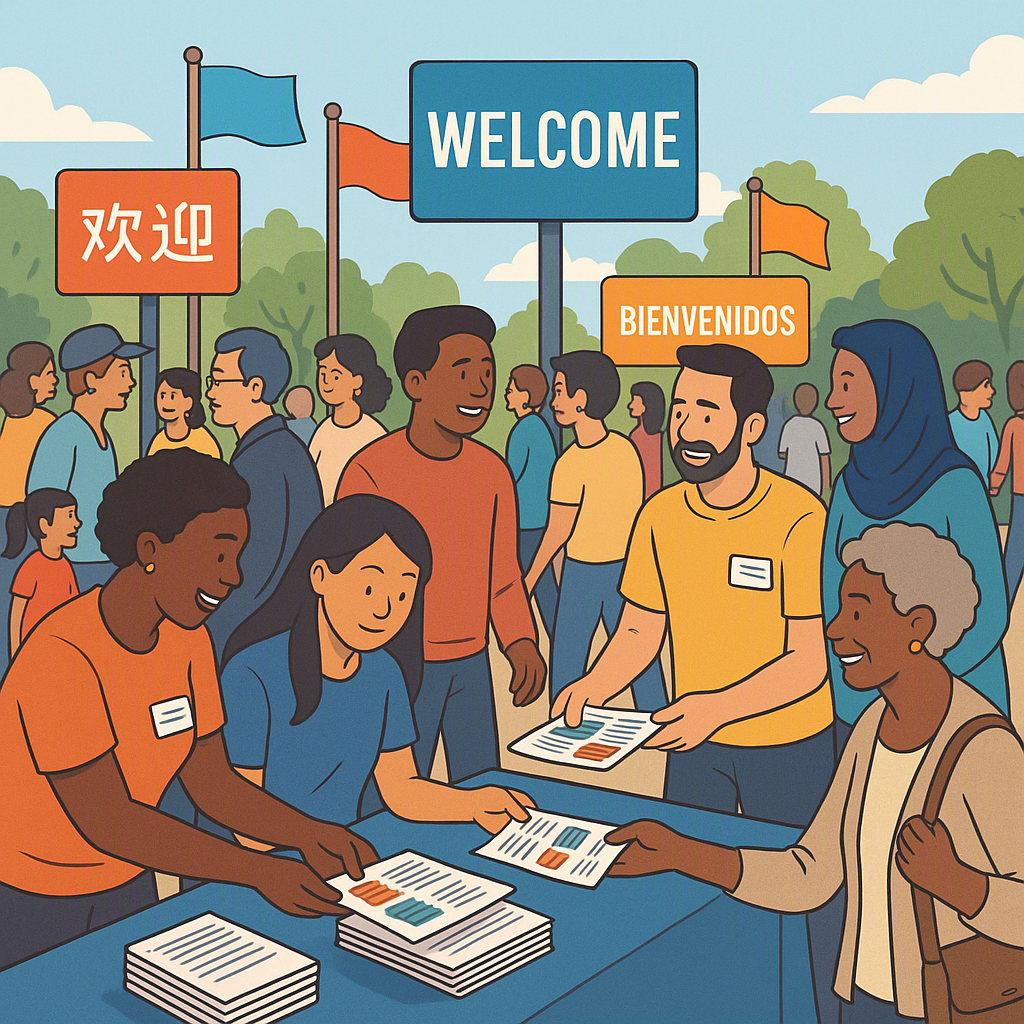
Now, I recommend multilingual event materials and staffing—even for small-scale events. It doesn’t have to be fancy. Start with translated flyers or signage. For bigger events, consider hiring part-time interpreters. If that’s not feasible, train volunteers to handle basic language needs.
Step-by-Step Improvements for Multilingual Inclusion
-
Start with Key Materials
- Translate event flyers, programs, and signage into the primary languages spoken in your community. Prioritize clear, concise messaging for maximum effectiveness.
-
Use Multilingual-Friendly Tools
- Platforms like CommunityTix make it easier to create inclusive event pages, tickets, and promotional materials. They support a range of languages and scripts, including Bengali, Mandarin, and Devanagari.
-
Hire or Train Staff
- If hiring professional interpreters isn’t in the budget, consider training volunteers to assist with basic language support. Free online resources or affordable local workshops can help bridge the gap.
-
Simplify Communication
- Provide volunteers or staff with pre-written scripts for common questions and answers in multiple languages. Even basic phrases like “Where’s the restroom?” or “What time does the event start?” can make attendees feel more welcome.
-
Leverage Technology
- Use apps like Google Translate or iTranslate for on-the-spot translations. While not perfect, they can fill in gaps when no interpreter is available.
For example, if you’re hosting a multicultural food festival, you could use CommunityTix to design tickets in both English and Hindi. Pair that with a few bilingual volunteers, and suddenly your event feels welcoming to everyone. These small steps can go a long way in fostering inclusivity.
What Being Wrong Cost—and What I’m Still Unsure About
Not embracing multilingual support earlier probably limited attendance at some of my past events. I wonder how many people didn’t come—or didn’t fully engage—because they felt excluded. Worse, I might have missed opportunities to build bridges between communities.
The Cost of Exclusion
Beyond attendance numbers, there’s a bigger cost: the missed chance to build trust and relationships. People notice when events make an effort to include them. On the flip side, they also notice when they’re left out. Even unintentional exclusion can lead to a sense of alienation, which is the opposite of what community events aim to achieve.
When Does It Make Sense?
Still, I’m not convinced every event needs this level of effort. A small AGM? Probably not worth it. But for fundraisers, festivals, and anything aiming to grow its audience? It’s hard to argue against it. The key is to weigh the inclusivity benefits against the costs and complexity of implementation.
Budget-Friendly Alternatives
TranslateAble’s service is impressive, but it’s geared toward exhibitors with money to spend at large-scale trade shows. For example, exhibitors at one of the UK’s international exhibitions recently benefited from multilingual staffing to engage with buyers from diverse linguistic backgrounds. Community organizers working on smaller budgets will need affordable alternatives. CommunityTix has tools to help, but it’s no substitute for human interpreters. Finding a balance that works for your event size and audience is crucial.
| Event Type | Needs Multilingual Support? | Suggested Approach |
|---|---|---|
| Small AGM | Probably not | N/A |
| Local fundraiser | Possibly | Translated flyers/signage, trained vols |
| Cultural festival | Yes | Part-time interpreters, multilingual materials |
| Trade show booth | Yes | Professional interpreters, full materials |
Final Thoughts
If you’re dealing with community event accessibility, CommunityTix can help. Get started free →